


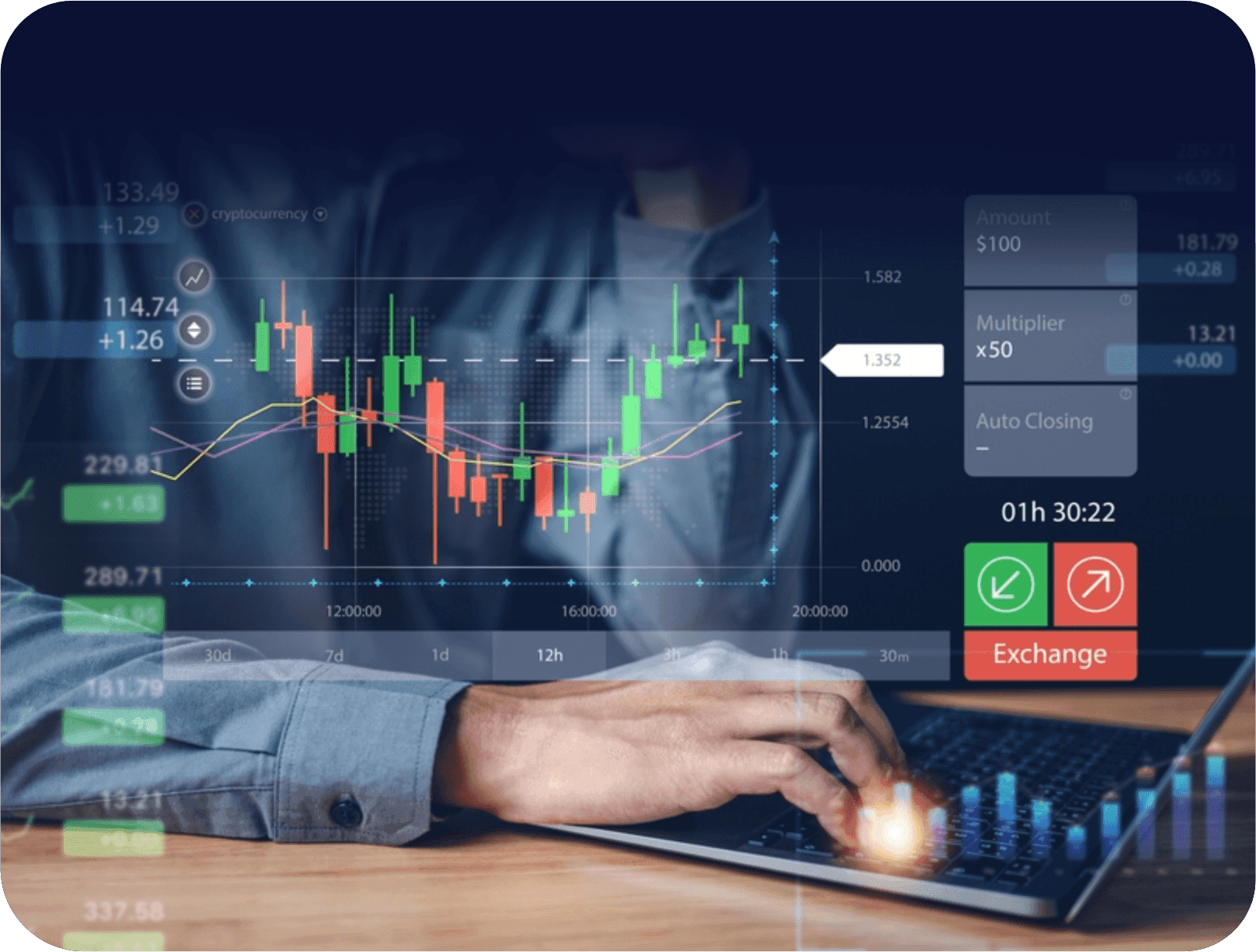
You’ve analyzed the charts, identified the perfect entry point, and executed your trade. But the moment the order is filled, you see you are already in the red. Why? The answer lies in the bid-ask spread.
For many traders, especially those new to the markets, the spread is often an afterthought—a minor detail overshadowed by the excitement of price action and leverage. However, ignoring the spread is akin to running a business without understanding your overhead costs. It is the silent fee that accompanies every transaction, and in the world of high-frequency or high-volume trading, it can be the deciding factor between a profitable strategy and a losing one.
At MyMaa Markets, we believe that transparency and education are the cornerstones of successful trading. This guide delves beyond the surface definition of spreads, offering the expert analysis needed to master this critical component of financial markets.
The Hidden Cost of Trading
To demystify the spread, we must first strip back the jargon. Financial markets are auctions.
-
The Bid Price: The highest price the market (a buyer) is willing to pay you for an asset.
-
The Ask Price: The lowest price the market (a seller) is willing to accept from you for an asset.
The spread is simply the gap between these two figures. It represents the cost of immediate liquidity—the premium you pay to enter or exit the market instantly.
While a spread of 1 or 2 pips might seem negligible on a single trade, the cumulative impact is profound. Consider a scalper executing 10 trades a day. Over a month (approx. 20 trading days), that is 200 trades. If the spread is 2 pips instead of 0.5 pips, the trader is paying an "extra" 300 pips in costs. On a standard lot where a pip equals $10, that is a difference of $3,000 in pure profit lost to inefficiency.
Why Spreads Widen: The Liquidity Connection
One of the biggest challenges traders face is the volatility of spreads. You might enter a trade expecting a tight spread, only to find it has widened significantly, eroding your potential profit margin. Understanding why this happens allows you to adapt your strategy. Spreads are inversely proportional to liquidity:
-
High Liquidity: In major pairs like EUR/USD, heavily traded during the overlap of the London and New York sessions, competition among providers is fierce. This drives the bid and ask prices closer together, resulting in tight spreads.
-
Low Liquidity: During the "witching hour" (the rollover period between the New York close and Tokyo open), or on minor currency pairs, there are fewer participants. To mitigate risk, liquidity providers widen the spread.
The Volatility Trap
Furthermore, during major economic news releases (like Non-Farm Payrolls) or geopolitical shocks, uncertainty spikes. Providers widen spreads to protect themselves from rapid price changes. Traders who fail to account for this often experience slippage, where the executed price is worse than the requested price, compounding the cost of the spread.
Mastering the Spread: Strategies for Success
Knowledge of the spread is only useful if it informs your actions. Here is how professional traders manage spread costs to maximize profitability.
1. Choose the Right Broker Model
Not all spreads are created equal. Brokers typically offer fixed or variable spreads.
-
Fixed Spreads: Offer predictability but are often wider to cover the broker's risk.
-
Variable Spreads: Reflect true market conditions. While they can fluctuate, they are generally tighter during liquid trading hours.
For serious traders, Raw Spread or VIP accounts are often the superior choice. These accounts, like the VIP Account at MyMaa Markets, offer spreads starting from 0.0 pips. While there may be a small commission, the total cost of trading is usually significantly lower than a standard "no commission" account with wider markups.
2. Time Your Trades
If your strategy allows, avoid trading during low-liquidity windows. The Asian session lunch break or public holidays can see wider spreads on European and US assets. Align your trading activity with the peak hours of the asset you are trading.
3. Incorporate Spreads into Risk Management
Your Stop Loss and Take Profit levels must account for the spread.
-
Long Positions: Remember you exit at the Bid price. Ensure your Take Profit is high enough above the Bid to actually trigger.
-
Short Positions: You exit at the Ask price. A tight Stop Loss might be triggered prematurely by a widening spread (the Ask price moving up) even if the Bid price hasn't reached your level on the chart.
4. Monitor Spread in Real-Time
Tools like MetaTrader 5 (MT5) allow you to view the Bid and Ask lines directly on your chart. Enabling this visual aid prevents the frustration of seeing price "touch" your level without executing the order. The MyMaa Markets Advantage
In an industry often criticized for a lack of transparency, MyMaa Markets stands apart. We understand that for our clients—whether in the UAE, India, or across global emerging markets—every pip counts. We tackle the challenges of trading costs head-on:
-
Institutional-Grade Liquidity: By aggregating prices from top-tier providers, we ensure our spreads remain competitive, even in volatile conditions.
-
Spreads from 0.0 Pips: Our VIP and Premium account structures are designed to give high-volume traders the raw pricing they need to succeed.
-
Transparent Execution: As an FSC-regulated broker, we adhere to strict standards of fairness. We provide the tools you need to verify your trade execution and costs.
Conclusion: Take Control of Your Trading Costs
Trading is a business of probabilities and margins. You cannot control where the market goes, but you can control your costs. By understanding the mechanics of the bid-ask spread and choosing a broker that aligns with your need for efficiency, you stop leaking profits and start trading with precision.
Don't let hidden costs undermine your strategy.
Ready to experience the difference of trading with raw spreads?
✅ Check your costs: Compare our spreads against your current broker. ✅ Open a VIP Account: Access spreads starting from 0.0 pips. ✅ Trade with Confidence: Join a regulated broker committed to your success.