


The global financial markets are vast, moving trillions of dollars every single day. For a beginner standing at the edge of this landscape, the sheer number of options can feel overwhelming. Should you track the price of Gold? Buy shares in Apple? Or perhaps trade the exchange rate between the Euro and the Dollar?
Choosing the right market to specialise in is not just about preference; it is a strategic decision that aligns your financial goals, risk tolerance, and available time with the right asset class. Specialisation allows you to deepen your knowledge, recognise patterns more effectively, and avoid the common pitfall of "over-trading" across too many instruments. This guide will walk you through the essential factors to consider when selecting your first market, ensuring you start your trading journey on a solid foundation.
Assessing Your Asset Class Options
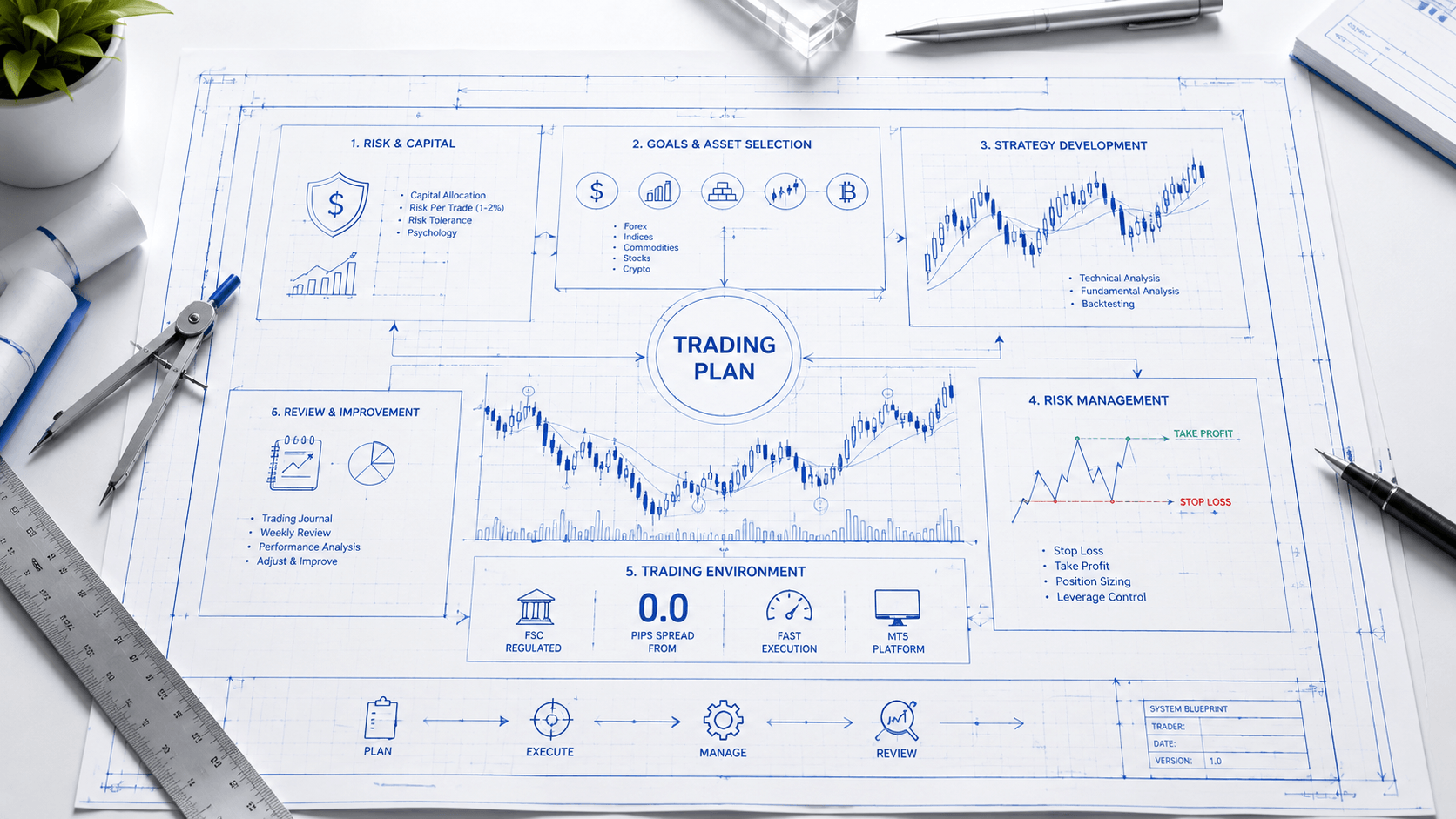
At My Maa Markets, we offer access to over 3000 instruments across five distinct asset classes. Understanding the unique characteristics of each is the first step in making an informed choice.
Forex (Foreign Exchange)
The forex market is the largest and most liquid financial market in the world. It involves trading currency pairs, such as EUR/USD or GBP/USD.
-
Best for: Traders who want 24/5 market access and high liquidity.
-
Key Feature: Forex markets are driven by macroeconomic events like interest rate decisions and GDP data.
Indices
Indices measure the performance of a group of shares from a specific exchange, such as the US500 (S&P 500) or UK100 (FTSE 100).
-
Best for: Traders who want to take a view on a specific country's economy rather than individual companies.
-
Key Feature: Indices often have smoother trends than individual stocks but can be volatile during market openings.
Metals (Commodities)
This involves trading precious metals like Gold (XAU/USD) and Silver (XAG/USD).
-
Best for: Traders looking for "safe-haven" assets during times of economic uncertainty.
-
Key Feature: Gold often moves inversely to the US Dollar, providing unique hedging opportunities.
Stocks (Shares)
Trading Share CFDs allows you to speculate on the price movements of major companies like Tesla, Amazon, or Microsoft without owning the underlying asset.
-
Best for: Traders who follow corporate news, earnings reports, and specific industry trends.
-
Key Feature: Stocks are highly sensitive to company-specific news and quarterly earnings reports.
Key Selection Criteria
Once you understand the asset classes, you must evaluate them against three critical factors: volatility, liquidity, and safety.
1. Volatility
Volatility refers to how rapidly and significantly a price changes. High volatility (common in Crypto or Exotic Forex pairs) offers the potential for higher returns but comes with increased risk. Low volatility allows for a steadier, albeit often slower, trading pace. As a beginner, you might prefer major Forex pairs or Indices, which offer a balance of movement and stability.
2. Liquidity
Liquidity is the ease with which an asset can be bought or sold without affecting its price. High liquidity generally results in tighter spreads (the difference between the buy and sell price). Major markets like EUR/USD or Gold are highly liquid, ensuring your orders are executed quickly and efficiently.
3. Regulatory Safety
Regardless of the market you choose, the safety of your funds is paramount. You should only trade with a regulated broker. My Maa Markets is fully authorised and regulated by the Financial Services Commission (FSC) of Mauritius. This ensures we adhere to strict financial standards, including the segregation of client funds.
Gaining an Edge with the Right Tools
Success in your chosen market often depends on the quality of your tools. Professional traders do not rely on guesswork; they use data.
-
Live Market Analytics: Utilising the MetaTrader 5 (MT5) platform allows you to access advanced charting tools and technical indicators. This helps you analyse historical data to predict future movements.
-
Tight Spreads: In trading, every pip counts. Costs can eat into your profit margins, especially if you are a high-frequency trader. At My Maa Markets, we offer spreads from 0.0 pips on our VIP accounts, giving you institutional-grade execution that puts you ahead of the curve.
Managing Your Trading Costs
When you are starting out, keeping overheads low is crucial for survival. High fees can quickly deplete a small account balance.
-
Zero Deposit Fees: Look for brokers that do not charge you just to fund your account. We offer $0 deposit fees across all payment methods, ensuring 100% of your capital goes towards your trades.
-
Commission Structure: Understanding the difference between "standard" accounts (often zero commission but wider spreads) and "raw" accounts (tight spreads with a fixed commission) is vital. For beginners, a Standard Account with no commission is often the simplest way to calculate costs.
Risk Awareness and Capital Preservation
The most important rule in trading is to protect your capital. While leverage can amplify your gains, it also magnifies your losses.
-
Understanding Leverage: We offer leverage up to 1:500, which allows you to control a large position with a relatively small deposit. However, this should be used with extreme caution. Beginners should start with lower leverage until they are comfortable with risk management.
-
Stop Losses: Never enter a trade without a defined exit plan. Using Stop Loss orders on the MT5 platform ensures you cap your potential downside on any single trade.
Your Next Steps for Consistent Growth
Specialising in one market allows you to become an expert in its specific rhythms and drivers. Whether you choose the fast-paced world of Forex or the macroeconomic trends of Indices, consistency is key.
To support your journey, My Maa Markets provides:
-
Education: Comprehensive resources to improve your skills.
-
Support: 24/7 expert assistance whenever you need it.
-
Practice: A risk-free Demo Account to test your strategies before using real money.
Ready to focus on your financial future?
Disclaimer: Trading involves significant risk and may not be suitable for all investors. You should carefully consider your investment objectives, experience level, and risk appetite. Only invest money you can afford to lose.