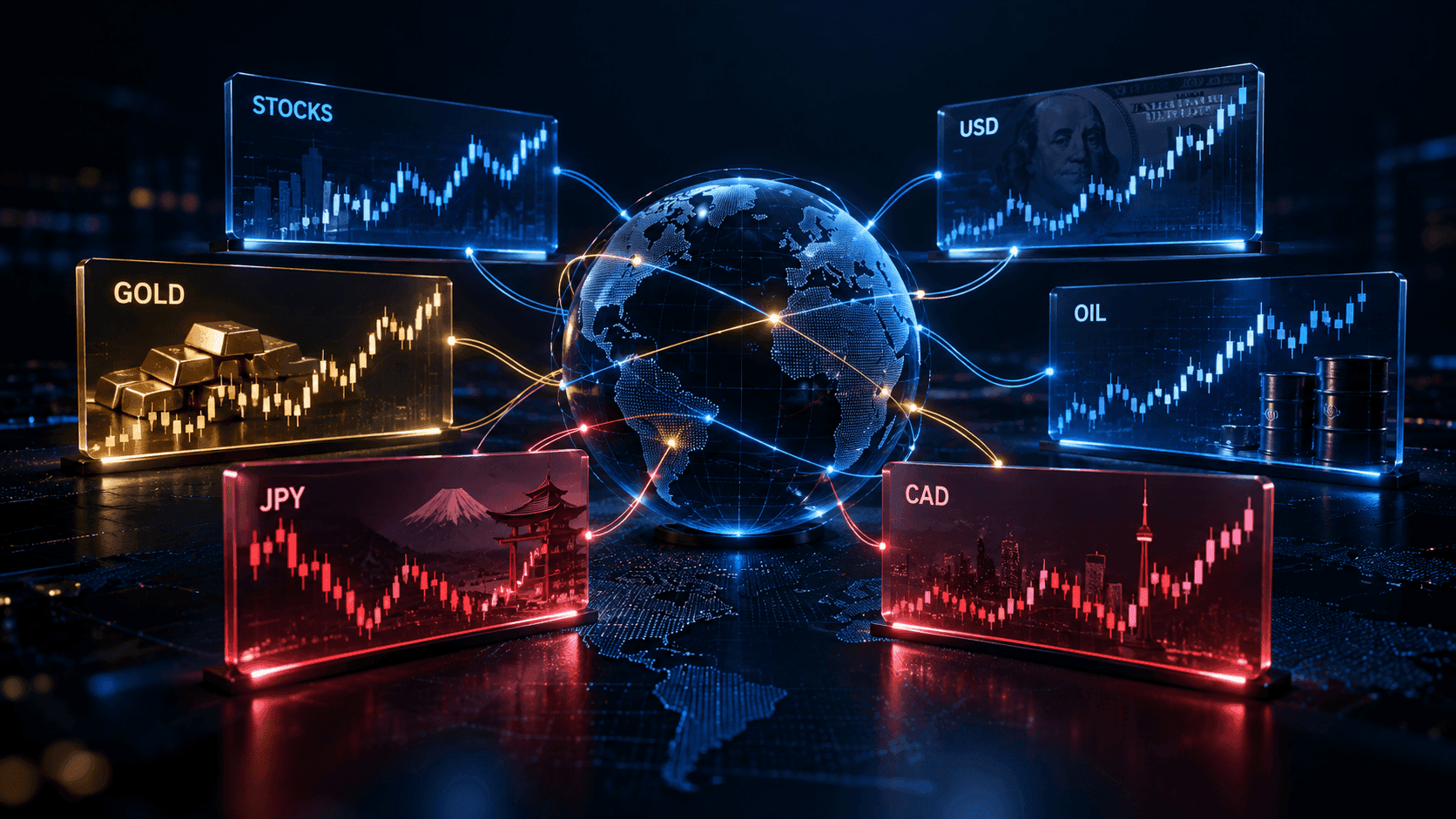



Understanding the financial markets requires more than just reading a chart. To truly grasp why prices move, you must look at the bigger picture. Macroeconomic factors are the engine room of the global economy, driving trends in currencies, commodities, and indices.
Whether you are a beginner looking to understand market volatility or an experienced trader refining your strategy, keeping an eye on these indicators is essential. At My Maa Markets, we provide the tools and live market analytics you need to track these shifts in real-time.
Here are the five key macroeconomic factors that shape the trading landscape.
1. Interest Rates
Central bank policies are arguably the most influential driver of currency values. When a central bank, such as the Federal Reserve (Fed) or the European Central Bank (ECB), raises interest rates, it is often to curb inflation. Higher interest rates typically attract foreign capital looking for the best return, which can increase the value of that country's currency. Conversely, lower interest rates can decrease a currency's value but may boost stock markets by making borrowing cheaper for businesses.
-
Real-world example: In July 2022, the Federal Reserve raised its target range for the federal funds rate to 2.25–2.50% to combat elevated inflation. This move signalled a hawkish stance, impacting the USD's strength against other major pairs.
-
Trader Tip: Monitor the economic calendar for central bank meetings (FOMC, ECB). Volatility often spikes immediately after rate announcements.
2. Inflation
Inflation measures the rate at which the rising costs of goods and services erode purchasing power. Central banks closely monitor indices like the Consumer Price Index (CPI) to decide on monetary policy. When inflation is high, consumers spend less, which can hurt corporate profits and stock prices. However, it may boost commodities like gold, which is often seen as a hedge against inflation.
-
Key Insight: If CPI data comes in higher than expected (e.g., a year-over-year increase of 2.7% or more), markets often react negatively, anticipating that central banks will raise interest rates to cool the economy down.
-
Trader Tip: Watch for "core" inflation figures, which exclude volatile food and energy prices, as central banks often weigh these more heavily.
3. Gross Domestic Product (GDP)
Gross Domestic Product (GDP) represents the total value of all goods and services produced by a country. It is the ultimate scorecard of economic health. Strong GDP growth suggests a robust economy where businesses are profitable and employment is high. This generally boosts the local currency and stock indices. Conversely, shrinking GDP can signal a recession, leading to sell-offs in equities and a potential weakening of the currency.
-
Data Point: A GDP growth rate of around 2-3% is typically considered healthy for developed economies. Recent data showing growth at an annual rate of 4.3% (as seen in Q3 2025 estimates) would signal strong economic expansion, potentially bolstering investor confidence.
-
Trader Tip: Compare the "Advance" GDP reading with the "Final" reading. The initial advance reading tends to have the biggest market impact.
4. Unemployment Rates
Employment data is a lagging indicator, meaning it confirms trends rather than predicting them, but it is powerful nonetheless. High employment fuels consumer spending, which drives economic growth. The most closely watched report is the US Non-Farm Payrolls (NFP). A strong report with job gains (e.g., +64,000 or more) and a stable or falling unemployment rate (e.g., around 4.6%) suggests economic resilience.
-
Market Impact: If unemployment rises unexpectedly, it signals economic distress. This often leads to a weaker currency and potential safe-haven flows into assets like bonds or gold.
-
Trader Tip: Do not just look at the headline number. Check the "Average Hourly Earnings" data within the report; wage growth is a key predictor of future inflation.
5. Geopolitical Events
Politics and geography often collide to create sudden market volatility. Wars, trade disputes, elections, and sanctions can disrupt supply chains and alter economic relationships overnight. During times of geopolitical instability, investors tend to flee riskier assets (like stocks) and move capital into "safe-haven" assets
-
Safe Havens: Gold, the US Dollar (USD), the Japanese Yen (JPY), and the Swiss Franc (CHF) often appreciate during geopolitical crises.
-
Trader Tip: Use tools like a Geopolitical Risk Index (GPR) or simply stay glued to live news feeds during global conflicts. Sudden news can invalidate technical setups instantly.
Risk Disclaimer
CFDs and Margin Fx are leveraged products carry a high level or risk to your capital. Trading is not suitable for everyone and may result in you losing substantially more than your initial investment. You do not own, or have any right to the underlying assets. You should only trade with money you can afford to lose.
Master the Markets with My Maa Markets
Understanding macroeconomic factors gives you a competitive edge, allowing you to anticipate market moves rather than just reacting to them. However, knowledge is only potential power—execution is key. Ready to apply these insights? Start trading with My Maa Markets today and access the global markets with competitive spreads and expert support.