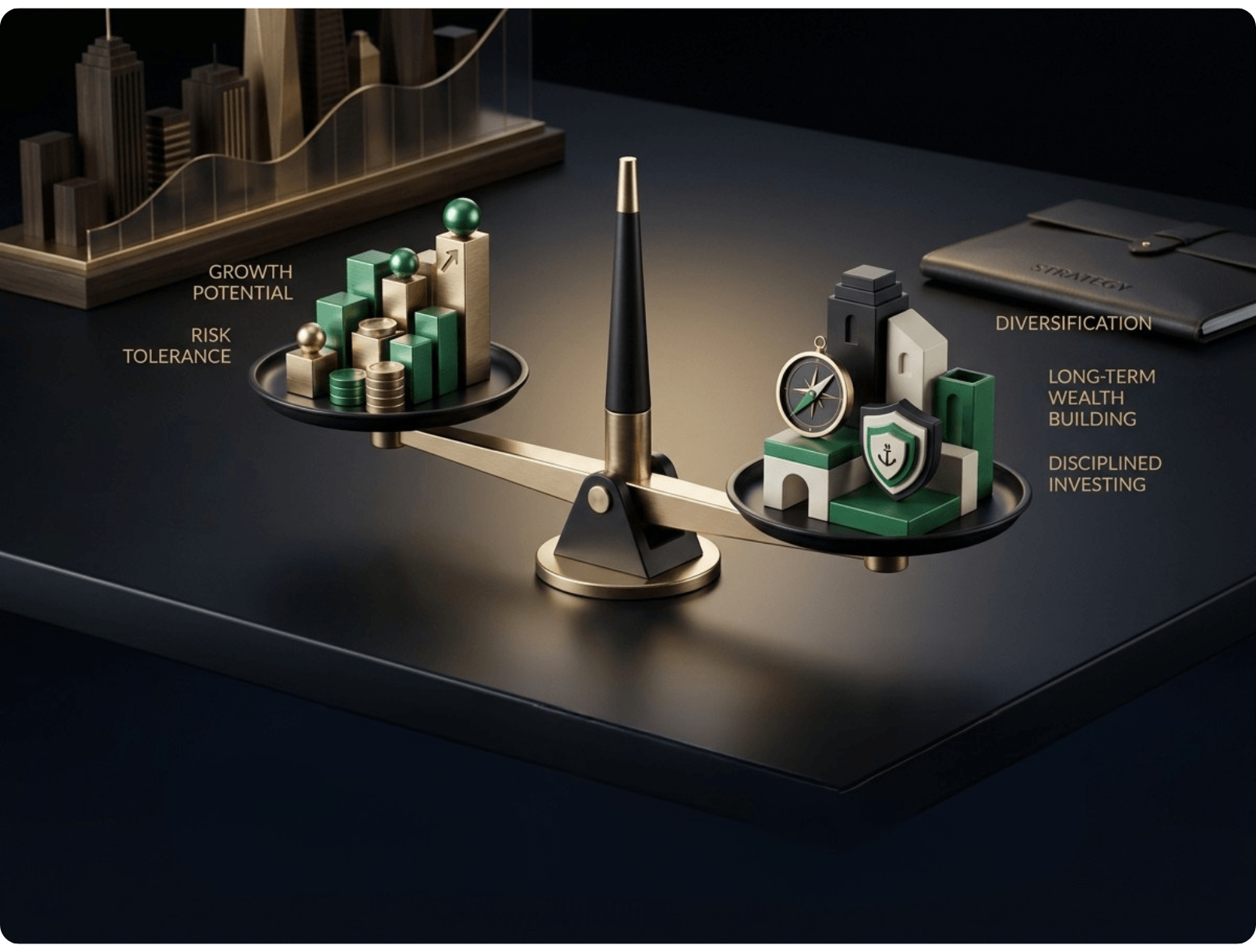


Trading on margin is one of the most powerful tools available to the modern retail trader. It allows you to control positions significantly larger than your actual account balance, amplifying your potential market exposure. However, margin is often referred to as a "double-edged sword" because while it boosts potential profits, it also increases risk.
For traders in the UAE, India, and emerging markets, understanding the mechanics of margin is not just a technical skill—it is a survival necessity. In this guide, we will demystify how margin requirements work, how to calculate them accurately, and how you can manage your leverage to trade with confidence on platforms like MetaTrader 5 (MT5).
1. Defining Margin and Its Purpose
At its core, margin is not a fee or a transaction cost. It is a "good faith" deposit or collateral that you must set aside from your account balance to open and maintain a leveraged position. When you trade CFDs or Forex, you are not buying the underlying asset outright; you are speculating on its price movement. The margin ensures that you have enough capital to cover potential losses.
For example, My Maa Markets offers leverage of up to 1:500 on certain account types. This means that for every $1 you put up as margin, you can control up to $500 in the market. This efficiency frees up the rest of your capital for other opportunities, allowing for a more diverse trading strategy.
2. Initial Margin vs. Maintenance Margin
To manage your trades effectively, you must distinguish between two critical types of margin:
-
Initial Margin: This is the amount required to open a new position. It is calculated based on the leverage you have selected and the size of the trade. If you do not have enough "free margin" in your account to cover this initial requirement, the platform will not execute the trade.
-
Maintenance Margin: This is the minimum amount of equity you must keep in your account to keep the position open. If the market moves against you and your equity falls below this level, you may trigger a "Margin Call" or eventually a "Stop Out," where the broker automatically closes your positions to prevent a negative balance.
Tip: Always keep a buffer of free margin in your account. Just because you can open a trade with maximum leverage doesn't mean you should use every available dollar, as this leaves zero room for market fluctuations.
3. Factors Affecting Margin Requirements
Margin requirements are not static; they can change based on several factors. Understanding these variables helps you anticipate changes in your "used margin."
-
Asset Class: Different instruments carry different risks. Major Forex pairs (like EURUSD) typically have lower margin requirements because they are highly liquid. Conversely, exotic pairs, cryptocurrencies, or volatile stocks often require higher margin.
-
Economic Events: During periods of expected high volatility—such as Non-Farm Payrolls or central bank announcements—brokers may temporarily increase margin requirements to protect clients from rapid market gaps.
-
Regulatory Standards: As a regulated broker under the FSC (Mauritius), My Maa Markets adheres to strict guidelines to ensure client safety, which can influence leverage limits and margin settings.
4. How to Calculate Margin
While modern platforms like our advanced MT5 will automatically calculate the required margin for you, knowing the formula empowers you to plan trades precisely.
The basic formula for Forex is:
(Market Price × Trade Volume) / Leverage = Required Margin
Let’s look at a practical example:
Imagine you want to buy 1 standard lot (100,000 units) of EURUSD at a price of 1.1000, using 1:500 leverage.
-
Trade Value: 100,000 units × 1.1000 = $110,000
-
Calculation: $110,000 / 500 = $220
In this scenario, you only need $220 in your account to control a position worth $110,000.
Tip: Use the specific "Contract Specification" details within your MT5 terminal to see the exact contract size for indices or commodities, as these calculations can vary slightly from Forex pairs.
5. Risks of Trading on Margin (Leverage)
The primary appeal of margin trading is leverage, but this is also its primary risk. Leverage amplifies the outcome of your trade—for better or worse.
If you are trading with 1:500 leverage, a market movement of just 0.2% against your position could theoretically wipe out your initial margin deposit (100% loss of the allocated funds) if proper risk management isn't in place. This is why "Margin Level"—the ratio of equity to used margin—is a critical metric to watch. If this percentage drops too low (often below 100% or 50%, depending on the account type), you enter the danger zone of liquidation.
6. Strategies for Managing Margin Effectively
Successful traders don't just calculate margin; they manage it proactively. Here are practical ways to protect your capital:
-
Use Stop Losses: Never enter a trade without a predefined exit point. A Stop Loss order ensures that if the market moves against you, the trade is closed before it eats into your maintenance margin.
-
Monitor Your Margin Level: Aim to keep your Margin Level well above 100%. If you see it dropping towards that figure, consider reducing your position size or adding funds to the account.
-
Trade Smaller Sizes: Instead of opening one massive position, consider breaking it down into smaller trades. This allows you to scale in and out of the market without committing all your margin at once.
Tip: At My Maa Markets, we believe knowledge is your greatest trading asset. Utilise our 24/7 expert support if you are ever unsure about how a specific trade will impact your margin level.
Key Takeaways
Mastering margin requirements is the first step toward professional trading. By understanding the difference between initial and maintenance margin, calculating your requirements accurately, and respecting the power of leverage, you can navigate global markets with greater safety and precision.
Ready to put this knowledge into practice? Open a live account with My Maa Markets today to access spreads from 0.0 pips, institutional-grade execution, and a robust trading environment designed for your success.
Risk Disclaimer: CFDs and Margin Fx are leveraged products carry a high level or risk to your capital. Trading is not suitable for everyone and may result in you losing substantially more than your initial investment. You do not own, or have any right to the underlying assets. You should only trade with money you can afford to lose.