


In the fast-paced world of trading, having the right tools to identify potential opportunities is essential. Among the most popular tools in a trader's arsenal is the Moving Average Convergence Divergence (MACD). Whether you are trading forex, indices, or commodities, this versatile indicator helps traders gauge the strength of a price move and identify potential turning points.
This guide breaks down the MACD into simple, actionable components, helping you understand how to calculate it, interpret its signals, and integrate it into your trading strategy on the My Maa Markets platform.
1. What is the MACD?
The Moving Average Convergence Divergence (MACD) is a trend-following momentum indicator that shows the relationship between two moving averages of a security's price. It was developed in the late 1970s and remains a staple for technical analysts because it serves two purposes: it identifies the direction of the trend and measures the momentum behind it.
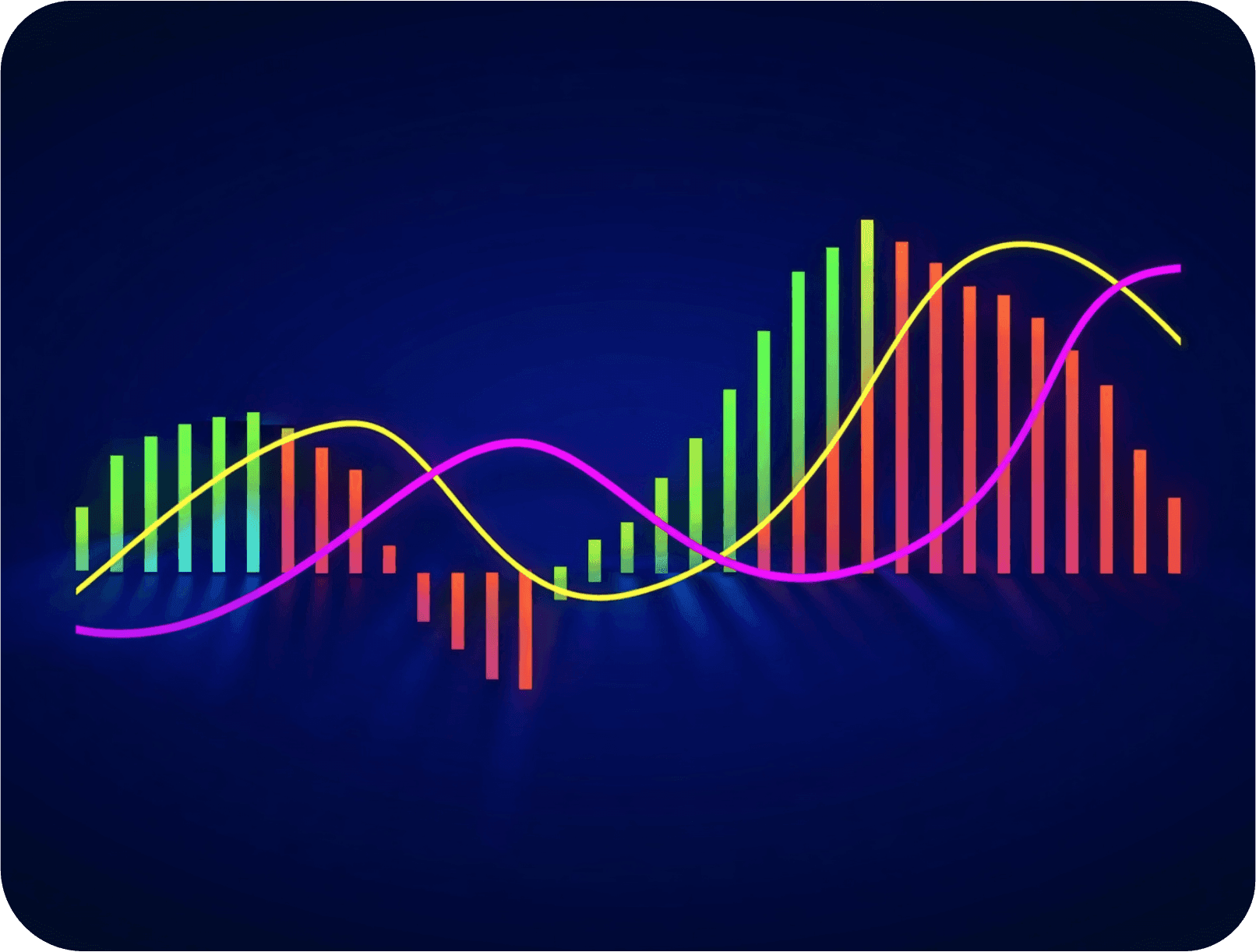
The MACD indicator consists of three key components:
-
The MACD Line: This is the faster-moving line that reacts quickly to price changes.
-
The Signal Line: A slower-moving average that acts as a trigger for buy and sell signals.
-
The Histogram: A visual representation (bar chart) that shows the distance between the MACD line and the Signal line.
2. How to Calculate the MACD
While trading platforms like MetaTrader 5 (MT5) on My Maa Markets calculate this automatically, understanding the math behind the indicator helps you interpret it better.
Here is the step-by-step formula:
- Calculate the MACD Line: Subtract the 26-period Exponential Moving Average (EMA) from the 12-period EMA.
○ Formula: MACD Line = 12-Day EMA - 26-Day EMA
- Calculate the Signal Line: This is typically a 9-day EMA of the MACD Line calculated above.
○ Formula: Signal Line = 9-Day EMA of the MACD Line
- Calculate the Histogram: Subtract the Signal Line from the MACD Line.
○ Formula: Histogram = MACD Line - Signal Line
3. Interpreting MACD Signals
The interaction between the MACD line and the Signal line provides the primary trading signals. Traders watch for "crossovers" to identify potential entry and exit points.
-
Bullish Signal: A bullish signal occurs when the MACD line crosses above the Signal line. This suggests that the momentum is shifting upwards, and it may be a good time to consider a long (buy) position.
-
Bearish Signal: A bearish signal occurs when the MACD line crosses below the Signal line. This indicates that downward momentum is increasing, which may suggest a short (sell) position.
-
Histogram Analysis: The histogram grows larger as the two lines move further apart (indicating strong momentum) and shrinks as they get closer (indicating weakening momentum).
4. Understanding MACD Divergence
One of the most powerful aspects of the MACD is "divergence." This happens when the direction of the MACD indicator disagrees with the direction of the price action. Divergence can often signal an upcoming reversal.
-
Bullish Divergence: This occurs when the price records a lower low, but the MACD forms a higher low. This suggests that selling pressure is fading and an upward reversal may be imminent.
-
Bearish Divergence: This happens when the price records a higher high, but the MACD forms a lower high. This indicates that buying momentum is stalling, and the price may soon turn downward.
5. Using MACD with Other Indicators
While MACD is powerful, no single indicator is perfect. To increase the reliability of your signals and filter out "false positives," savvy traders often combine MACD with other technical tools.
-
RSI (Relative Strength Index): Combining MACD with RSI can help confirm if a market is overbought or oversold. For example, a bullish MACD crossover combined with an RSI moving out of oversold territory provides a stronger confirmation.
-
Volume Analysis: Volume confirms trends. If a MACD bullish crossover is accompanied by high trading volume, the signal is considered more robust than if it occurred on low volume.
6. Pros and Cons of Using MACD
Before adding MACD to your chart, it is important to weigh its advantages against its limitations.
Pros:
-
Simplicity: It is easy to interpret, making it excellent for beginners.
-
Dual-Function: It identifies both trend direction and momentum strength simultaneously.
Cons:
-
Lagging Indicator: Because it is based on moving averages (past data), signals may appear after the price move has already started.
-
False Signals: In sideways or "choppy" markets, the MACD lines may cross frequently without a clear trend, leading to potential losses.
Risk Disclosure
At My Maa Markets, we believe in transparent and informed trading. Please remember that CFDs and Margin FX are leveraged products and carry a high level of risk to your capital. Trading is not suitable for everyone and may result in you losing substantially more than your initial investment. You do not own, or have any right to the underlying assets. You should only trade with money you can afford to lose.
Conclusion
The MACD is a versatile tool that can enhance your ability to spot trends and momentum shifts in the global markets. By understanding its components—crossovers, the histogram, and divergence—you can make more informed decisions. However, always remember to use it alongside other indicators and sound risk management strategies.
Ready to apply this knowledge? Open an account with My Maa Markets today to access our advanced MT5 platform and start analyzing the markets with confidence.