


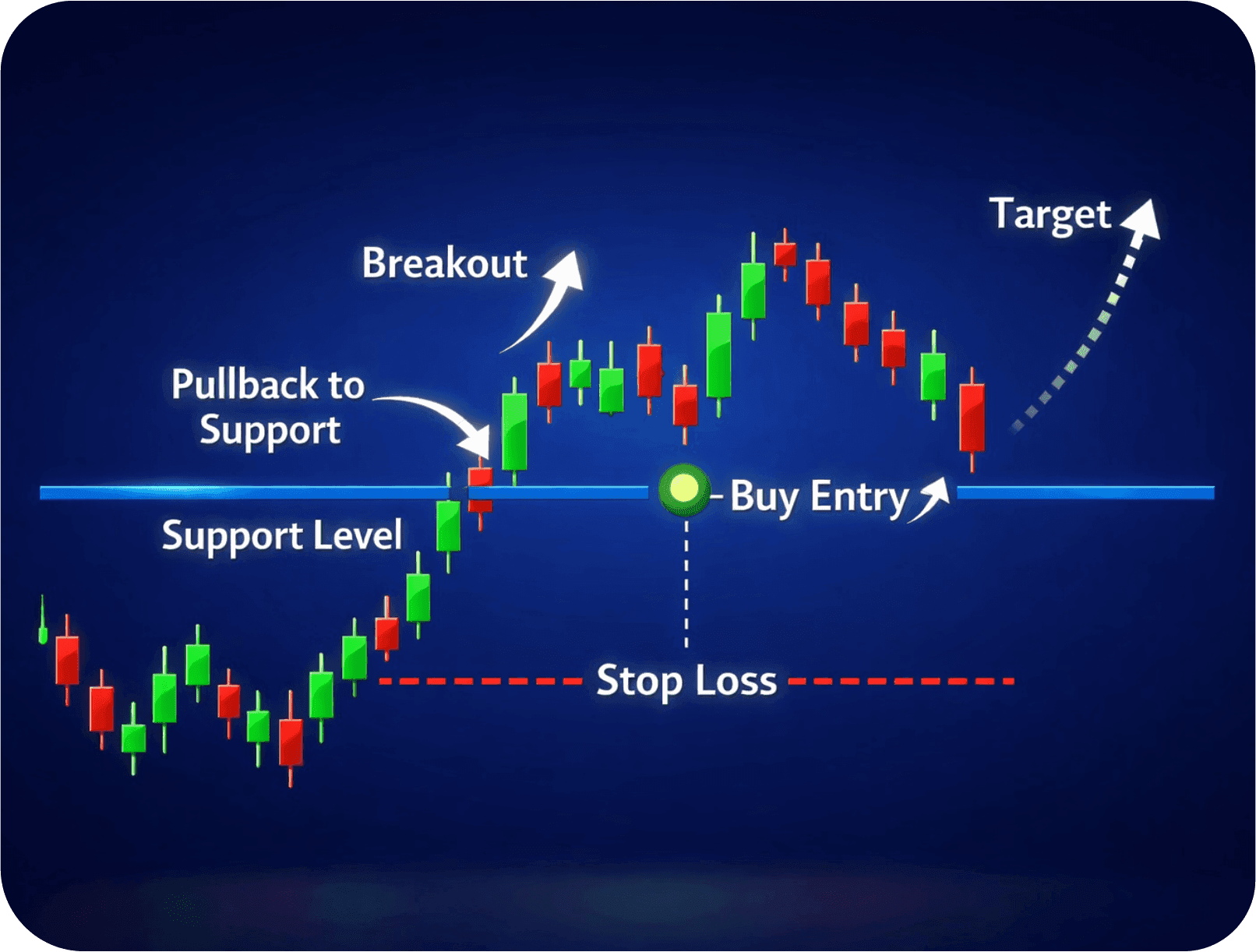
In the dynamic world of financial markets, the difference between a successful trade and a missed opportunity often comes down to timing. The horizontal pullback strategy is a time-tested approach that allows traders to join an existing trend at a more favourable price point, rather than chasing the market as it surges.
By mastering this strategy, you gain a structured framework for identifying high-probability entries, managing risk effectively, and maximizing your potential returns. Whether you are a beginner looking to understand market structure or an experienced trader seeking to refine your edge, this guide provides a clear roadmap for executing the horizontal pullback strategy with precision.
Step 1: Identify a Strong Uptrend
The foundation of the horizontal pullback strategy is a clearly defined trend. You are not looking to predict a market reversal; you are looking to ride the momentum of an existing move. Start by analyzing the charts for a sequence of higher highs and higher lows, which indicates bullish sentiment.
This strategy can be applied across a diverse range of asset classes. Whether you prefer the volatility of Forex, the broad movements of Indices, the stability of Metals, or the growth potential of Stocks, identifying a strong directional bias is the first critical step. Ensure the trend is visible on higher timeframes (such as the 4-hour or daily chart) to filter out market noise and focus on dominant price action.
Step 2: Recognize the Pullback
Once a trend is established, patience becomes your most valuable tool. Markets rarely move in straight lines; they breathe in cycles of expansion and contraction. A pullback is a temporary reversal or pause in the prevailing trend—a dip in an uptrend or a rally in a downtrend.
While pullbacks offer strategic entry points, it is vital to approach them with caution. CFDs and Margin Fx are leveraged products that carry a high level of risk to your capital. Leverage can amplify both gains and losses, meaning a market correction against your position can significantly impact your account balance. Understanding the nature of these movements is essential for safeguarding your investment.
Step 3: Confirm the Support Level
As the price pulls back, your goal is to identify where it is likely to stop and reverse back in the direction of the trend. In a horizontal pullback, you are looking for a specific price zone that previously acted as resistance (a ceiling) and, once broken, now acts as support (a floor).
Historical price data is your evidence here; look for areas where price has reacted multiple times in the past. Just as you seek reliability in your technical levels, you should seek reliability in your trading partner. Our platform is regulated by the FSC, ensuring that when you identify these critical market levels, you are executing your trades in a secure, transparent, and compliant environment.
Step 4: Define Your Entry Point
Identifying the support level is not enough; you need confirmation that buyers are stepping back in. Do not place a "buy limit" order blindly at the support line. Instead, wait for price action signals—such as a bullish engulfing candle, a hammer candlestick, or a rejection wick—that indicate the pullback is ending and the uptrend is resuming.
Precision in execution is critical here. When you enter the market, transaction costs can eat into your potential margins. To give your strategy the best chance of success, enjoy the tightest spreads while trading 0.0 Pips on our platform. Lower costs mean you reach your breakeven point faster, allowing your trade more room to breathe.
Step 5: Set a Protective Stop Loss
Risk management is the safety net of any trading strategy. Even the most perfect setup can fail due to unforeseen market volatility. Your stop loss should be placed below the horizontal support level or the recent swing low. This invalidates the trade setup if the price breaks significantly lower, protecting you from further downside.
It is crucial to be realistic about your risk tolerance. Trading is not suitable for everyone, and it may result in you losing substantially more than your initial investment if proper precautions aren't taken. Always calculate your position size so that a hit to your stop loss represents only a small, manageable percentage of your total trading capital.
Step 6: Establish a Profit Target
Knowing when to exit is just as important as knowing when to enter. A common and effective target for the horizontal pullback strategy is the recent swing high—the highest point the price reached before the pullback began. This is a logical area where selling pressure may re-emerge.
Successful trading is ultimately about realizing your gains. We believe that accessing your profits should be as efficient as the trade itself. With withdrawals within 2H, you can enjoy the flexibility of quick access to your funds, allowing you to manage your capital flow efficiently or enjoy the rewards of your successful analysis.
Step 7: Manage the Trade
Once your trade is live, active management is required. If the price moves in your favour, consider using a trailing stop to lock in profits or moving your stop loss to break even to eliminate risk. Avoid micromanaging the trade based on small fluctuations; trust the analysis you performed in the previous steps.
Start Trading with Confidence Today
The horizontal pullback strategy offers a disciplined approach to navigating global markets, but having the right tools is essential for execution. At My Maa Markets, we provide the robust technology, low costs, and regulatory security you need to trade effectively.