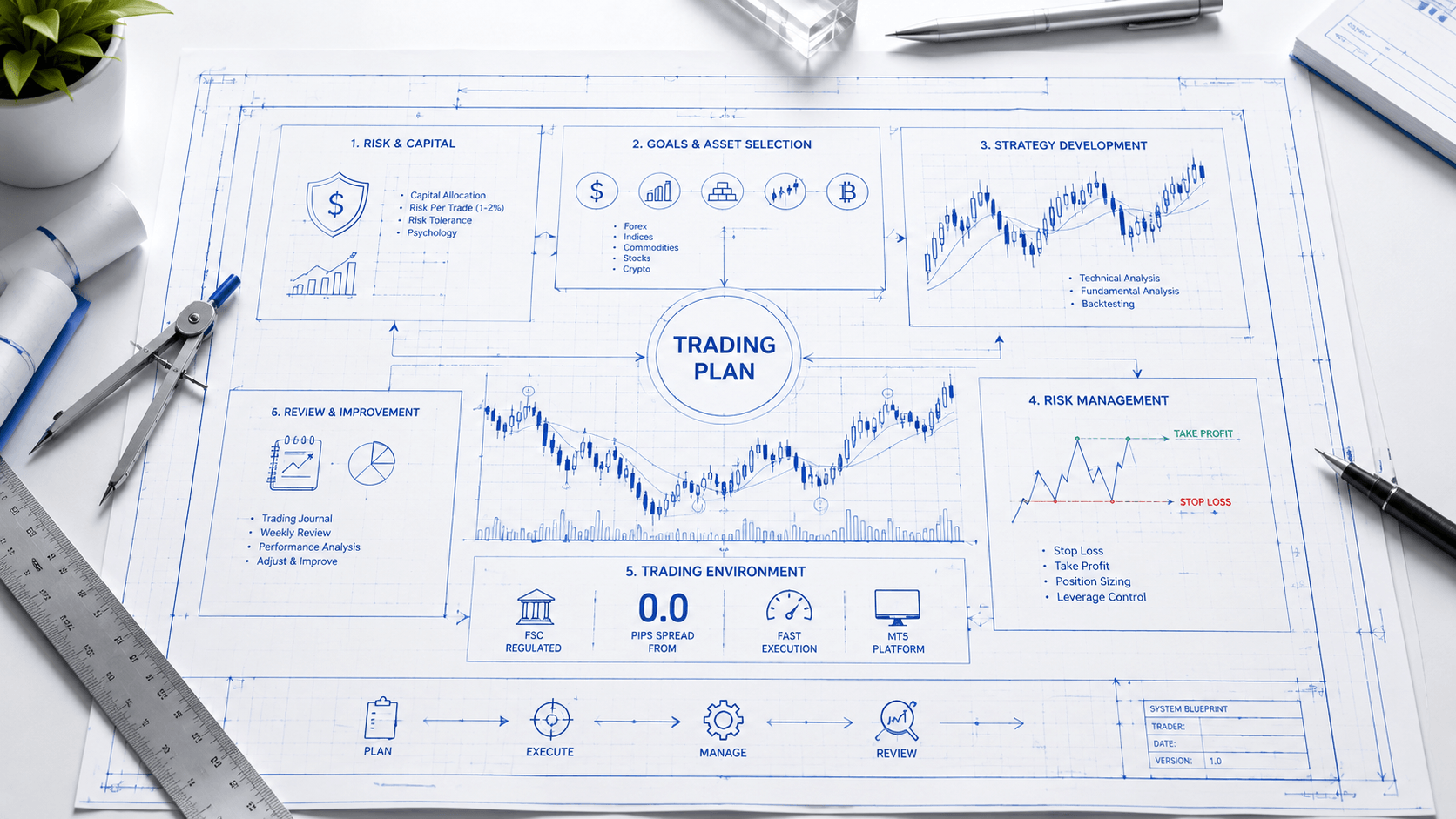



Day trading has always attracted individuals seeking financial independence and the thrill of the markets. From the bustling floors of 20th-century exchanges to today's digital landscape, certain traders have stood out not just for their profits, but for the methodologies they developed.
While their stories are inspiring, it is crucial to remember that day trading is highly risky. Leveraged products like CFDs and Margin FX carry a high level of risk to your capital, and trading is not suitable for everyone. However, by studying the masters, we can glean principles that help navigate volatility with greater discipline.
Here are 12 famous day traders and the essential lessons we can learn from them.
1. Jesse Livermore: The Importance of Patience
Known as the "Boy Plunger," Jesse Livermore is perhaps the most famous trader in history. Despite operating in the early 1900s, his rules remain the bedrock of modern technical analysis. His biggest lesson was that money isn't made in the buying and selling, but in the waiting. He emphasized waiting for the "pivot point" or the perfect market setup before entering a trade, rather than overtrading out of boredom.
2. Paul Tudor Jones: Defense First
Paul Tudor Jones is a legendary macro trader known for predicting the 1987 crash. His most famous mantra is, "Losers average losers." This means you should never add more capital to a losing position in hopes that it will turn around. Jones teaches that superior trading is about playing great defense; if you protect your capital during the bad times, the good times will take care of themselves.
3. George Soros: Reflexivity and Flexibility
George Soros, the man who "broke the Bank of England," is famous for his theory of reflexivity—the idea that market participants' biases affect market prices, which in turn affect the participants' views. His key lesson is flexibility. Soros was never afraid to admit he was wrong. If a trade went against his thesis, he would cut it immediately, regardless of his previous conviction.
4. Linda Raschke: Consistency Over Home Runs
Linda Raschke began her professional trading career in the early 1980s and is renowned for her consistency. Unlike traders who look for one giant win, Raschke focuses on short-term price fluctuations and high-probability setups. Her lesson is that consistency builds longevity. She advocates for specific, repeatable patterns (like the "Holy Grail" setup) rather than gambling on market direction.
5. Stanley Druckenmiller: Size Your Bets
A protégé of George Soros, Stanley Druckenmiller is famous for his aggressive position sizing. His philosophy is that you don't need to be right often to be rich; you just need to bet big when you are right. He teaches that when you have high conviction in a trade and the risk-reward ratio is in your favor, you should maximize the opportunity rather than trading small.
6. Ross Cameron: Small Cap Volatility
Ross Cameron is a modern day trader known for trading low-float, small-cap stocks. He focuses on momentum strategies, looking for stocks that are moving quickly on high volume. His lesson for retail traders is niche specialization. By focusing exclusively on a specific corner of the market (small caps with news catalysts), he developed a deep understanding of how those specific assets move.
7. Andrew Aziz: Resilience and Risk Management
Andrew Aziz, author of How to Day Trade for a Living, is a relatable figure for many modern retail traders. After losing his savings early in his career, he rebuilt his strategy with a strict focus on risk management. His lesson is that survival is the first goal of a day trader. He teaches that one bad trade should never be allowed to wipe out weeks of hard work.
8. Richard Dennis: Trends Can Be Taught
Richard Dennis, the "Prince of the Pit," famously conducted the "Turtle Trader" experiment to prove that trading could be taught. He took a group of novices and taught them a trend-following system. His lesson is to trade the price, not the news. Dennis believed that technical price action reflects all known information, and following the trend is safer than trying to predict reversals.
9. Paul Rotter: Liquidity is King
Paul Rotter, known as "The Flipper," was a scalper on the Eurex exchange who reportedly traded hundreds of thousands of contracts a day. His strategy involved placing orders on one side of the market to test liquidity, then quickly flipping to the other side. His lesson is to pay close attention to the order flow (Level 2 data). Understanding where the liquidity lies can show you where the market is likely to move next.
10. Mark Minervini: Volatility Contraction
Mark Minervini is a stock market wizard known for his Specific Entry Point Analysis (SEPA) methodology. He looks for stocks that are in a strong uptrend but are experiencing a period of "volatility contraction" (where price swings get tighter). His lesson is to buy strength, not weakness. He waits for the volatility to squeeze and for the price to break out before entering.
11. Bill Lipschutz: Market Sentiment
Bill Lipschutz is a legendary Forex trader who turned a $12,000 inheritance into hundreds of millions. He places a massive emphasis on understanding market sentiment. His lesson is that even if your technical analysis is perfect, you must understand the fundamental drivers and the "mood" of the market participants. If the market ignores good news, that is a bearish signal in itself.
12. Larry Hite: Managing the Odds
Larry Hite is a systems trader who treats trading purely as a game of probabilities. He famously said, "I have two basic rules about winning in trading as well as in life: (1) If you don't bet, you can't win. (2) If you lose all your chips, you can't bet." His lesson is to use leverage wisely and mathematically manage risk so that no single string of losses can take you out of the game.
Conclusion
The common thread among these famous traders is not a "secret indicator" or a magic formula. Instead, it is a relentless focus on risk management, discipline, and emotional control. Whether it is Jesse Livermore’s patience or Paul Tudor Jones’ defensive mindset, the goal is always capital preservation.
If you are ready to apply these lessons to your own trading journey, ensure you have the right partner. My Maa Markets offers robust platforms with advanced charting tools and competitive spreads to help you execute your strategy with precision.
Risk Disclaimer: CFDs and Margin Fx are leveraged products carry a high level or risk to your capital. Trading is not suitable for everyone and may result in you losing substantially more than your initial investment. You do not own, or have any right to the underlying assets. You should only trade with money you can afford to lose.