

Commodities trading offers a unique pathway to portfolio diversification and profit potential, but success requires understanding the fundamentals. This comprehensive guide will equip you with essential knowledge to navigate commodity markets confidently and make informed trading decisions.
Commodities represent the building blocks of global commerce—from the gold in your jewelry to the oil that powers transportation. Unlike stocks or bonds, commodities are tangible assets with intrinsic value, making them attractive to traders seeking alternatives to traditional financial instruments.
The commodities market spans multiple sectors, including energy, metals, agriculture, and livestock. Each sector responds differently to economic conditions, seasonal patterns, and geopolitical events. Understanding these dynamics helps traders identify opportunities and manage risk effectively.
Understanding Commodity Markets
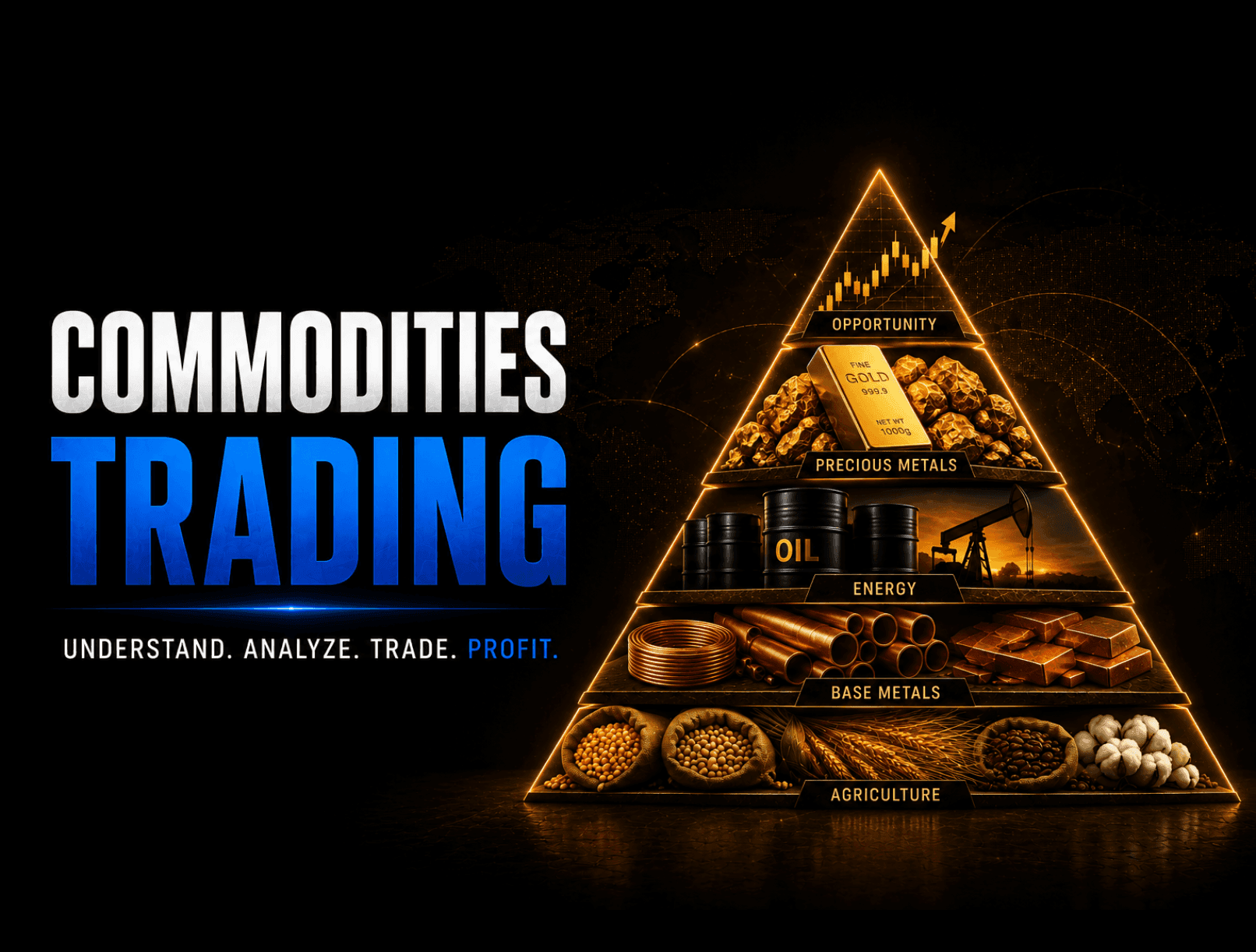
Commodities fall into four primary categories, each with distinct characteristics and trading patterns.
Energy commodities include crude oil, natural gas, heating oil, and gasoline. These markets are heavily influenced by geopolitical events, supply disruptions, and seasonal demand patterns. Oil prices often serve as economic indicators, affecting everything from transportation costs to manufacturing expenses.
Precious metals such as gold, silver, platinum, and palladium traditionally serve as hedges against inflation and currency devaluation. Gold, in particular, tends to perform well during economic uncertainty, making it a popular safe-haven asset.
Base metals like copper, aluminum, zinc, and nickel are essential for industrial production and construction. Copper prices often reflect global economic health, earning it the nickname "Dr. Copper" for its predictive qualities. Agricultural commodities encompass grains (wheat, corn, soybeans), soft commodities (coffee, sugar, cotton), and livestock (cattle, pork). Weather conditions, crop yields, and global food demand significantly impact these markets.
How Commodities Trading Works
Commodities trading occurs through various mechanisms, each offering different advantages and risk profiles. Spot markets involve immediate delivery and payment for physical commodities. While this provides direct exposure to commodity prices, it requires significant capital and storage capabilities, making it unsuitable for most retail traders. Futures contracts represent agreements to buy or sell commodities at predetermined prices on specific future dates. These standardized contracts trade on regulated exchanges and require only a fraction of the contract value as margin, providing leverage opportunities.
Exchange-Traded Funds (ETFs) offer exposure to commodity price movements without physical delivery requirements. Commodity ETFs track either individual commodities or diversified baskets, making them accessible to retail investors. Contracts for Difference (CFDs) allow traders to speculate on commodity price movements without owning underlying assets. CFDs offer leverage and the ability to profit from both rising and falling prices, but they carry significant risk.
Key Factors Driving Commodity Prices
Successful commodities trading requires understanding the fundamental forces that drive price movements. Supply and demand dynamics form the foundation of commodity pricing. Production disruptions, weather events, and changes in consumption patterns can create significant price volatility. For example, drought conditions in major agricultural regions can reduce crop yields and drive food prices higher.
Economic indicators such as GDP growth, manufacturing activity, and employment data influence commodity demand. Strong economic growth typically increases industrial metals demand, while economic slowdowns can depress energy consumption.
Geopolitical events can disrupt supply chains and create price spikes. Trade disputes, sanctions, and regional conflicts particularly impact energy and agricultural markets.
Currency fluctuations affect commodity prices since most trade in US dollars. Dollar strength typically pressures commodity prices lower, while dollar weakness can boost prices.
Seasonal patterns influence many commodities. Heating oil demand peaks during winter months, while agricultural products follow harvest cycles.
Essential Trading Strategies
Different approaches suit various risk tolerances and market conditions.
Trend following strategies capitalize on sustained price movements. Traders identify commodities in strong uptrends or downtrends and position accordingly. Technical analysis tools like moving averages and momentum indicators help identify trend direction and strength.
Seasonal trading exploits predictable price patterns. Natural gas often rises before winter heating season, while agricultural commodities may peak before harvest periods. Historical data helps identify these recurring patterns. Spread trading involves simultaneously buying and selling related commodities to profit from price relationships. Calendar spreads trade different delivery months of the same commodity, while intermarket spreads trade related commodities like crude oil versus gasoline.
Fundamental analysis focuses on supply and demand factors affecting specific commodities. This approach requires deep market knowledge but can identify significant price movements before they occur.
Risk Management in Commodities Trading
Commodity markets can be extremely volatile, making risk management crucial for long-term success. Position sizing determines how much capital to risk on individual trades. Never risk more than 2-3% of your trading capital on a single position, regardless of how confident you feel about the trade setup.
Stop-loss orders automatically close losing positions when prices reach predetermined levels. Set stops before entering trades and stick to them, even when emotions suggest holding longer.
Diversification across different commodity sectors reduces portfolio risk. Avoid concentrating positions in highly correlated markets that might all move against you simultaneously.
Leverage management is critical since futures and CFDs offer significant leverage. While leverage amplifies profits, it also magnifies losses. Use conservative leverage ratios until you gain experience.
Getting Started with Commodity Trading
Choose a regulated broker that offers competitive spreads and comprehensive market access. Look for platforms providing real-time market data, advanced charting tools, and reliable execution.
Start with a demo account to practice strategies without risking real money. This allows you to understand market behavior and test different approaches before committing capital.
Focus on one or two commodity sectors initially rather than trying to trade everything. Develop expertise in specific markets before expanding your trading universe.
Stay informed about factors affecting your chosen commodities. Follow relevant news sources, economic reports, and industry publications to understand market drivers.
Your Path to Commodity Trading Success
Commodities trading offers substantial profit potential for those who approach it with proper knowledge and risk management. Success requires understanding market fundamentals, developing effective strategies, and maintaining strict discipline.
Start your commodities trading journey with a solid foundation. Practice with demo accounts, study market patterns, and gradually build your expertise. Remember that consistent profitability comes from patience, discipline, and continuous learning rather than chasing quick profits.
Ready to explore commodity markets? Consider opening an account with a regulated broker that offers comprehensive market access, competitive spreads, and the educational resources you need to succeed.