

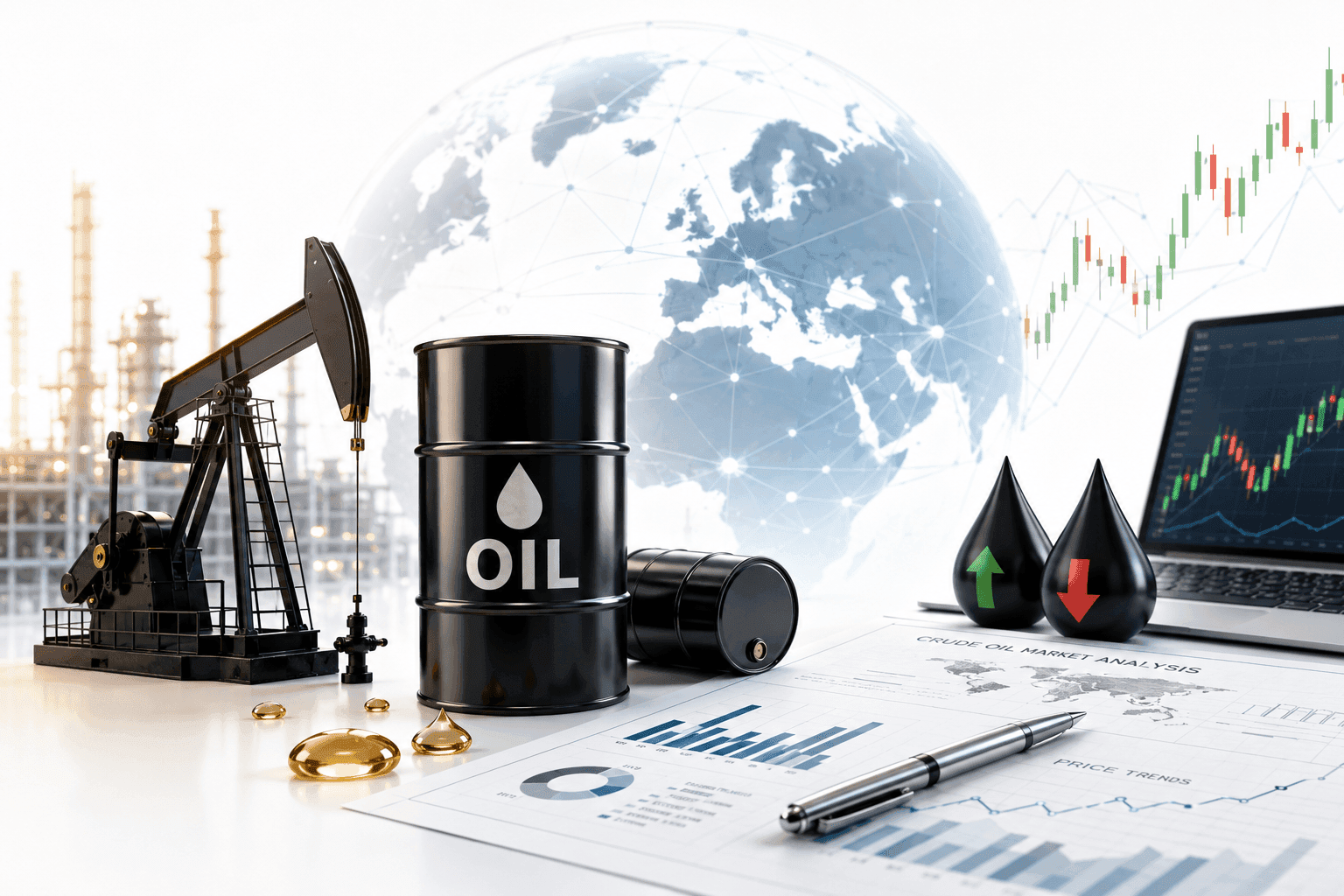
Oil is one of the world's most essential and actively traded commodities. From fueling our cars to creating industrial materials, its influence is everywhere. This constant global demand, combined with complex economic and geopolitical factors, means oil prices are almost always in motion, creating unique opportunities for traders.
However, trading oil involves navigating a market known for its volatility. Success requires a clear understanding of what drives its price and a solid strategy for managing risk.
This guide provides a comprehensive overview of oil trading. You will learn what influences oil prices, the different ways you can trade it, and how to develop a strategy that aligns with your financial goals. By the end, you'll have the foundational knowledge to approach the oil market with greater confidence.
Understanding the Oil Market
Oil trading is the buying and selling of crude oil and its refined products. It serves as a vital benchmark for the global economy's health, as demand for oil often reflects industrial and consumer activity. Oil is measured in barrels, with each barrel containing nearly 159 liters of crude oil. In 2022 alone, global production reached almost 94 million barrels per day.
The two primary benchmarks for crude oil are:
-
West Texas Intermediate (WTI): This is a light, sweet crude oil sourced in the United States. WTI is a key benchmark for the US market, with futures contracts delivered in Cushing, Oklahoma.
-
Brent Crude: Originating from the North Sea, Brent crude is the international benchmark for oil prices. It is used to price as much as 80% of the world's crude oil supply.
Because oil is priced and traded in US dollars, its value is also sensitive to fluctuations in the dollar. A stronger dollar can put downward pressure on oil prices, while a weaker dollar often supports them.
Key Factors That Influence Oil Prices
The price of oil is shaped by a wide range of dynamic factors. Understanding these drivers is essential for any trader looking to navigate the market effectively.
Supply and Demand
The fundamental principle of economics, the balance between supply and demand, is the primary driver of oil prices.
-
Supply: Production levels set by major oil-producing nations and organizations like OPEC significantly impact global supply. Disruptions from geopolitical events, natural disasters, or technical issues in production regions can quickly reduce supply and drive prices up.
-
Demand: The health of the global economy directly influences oil consumption. During periods of strong economic growth, industrial production and transportation increase, leading to higher oil demand and prices. Conversely, economic slowdowns reduce demand and can cause prices to fall.
Geopolitical Events
Much of the world's oil is produced in politically sensitive regions. As a result, geopolitical instability can have an immediate and significant impact on oil prices.
-
Conflicts and Instability: Tensions or conflicts in major oil-producing areas, such as the Middle East, can threaten supply chains and cause price spikes.
-
Sanctions and Trade Disputes: Political actions like sanctions against oil-exporting countries can remove a significant amount of oil from the global market, leading to higher prices.
OPEC Decisions
The Organization of the Petroleum Exporting Countries (OPEC) plays a crucial role in the oil market. OPEC and its allies (often referred to as OPEC+) meet regularly to set production quotas for member countries.
-
Production Cuts: When OPEC decides to cut production, it reduces global supply, which typically leads to higher oil prices.
-
Production Increases: Conversely, a decision to increase production can lead to an oversupply, driving prices down. Traders closely monitor OPEC meetings for signals about future market direction.
Economic Indicators
Key economic data from major economies provides insight into future oil demand.
-
GDP Growth: Strong GDP figures from countries like the US, China, and the European Union signal economic expansion and potentially higher oil consumption.
-
Industrial Production: Reports on manufacturing and industrial output can indicate changes in energy demand from these sectors.
-
Inventory Reports: Weekly reports, such as those from the U.S. Energy Information Administration (EIA), detail current crude oil inventory levels. A larger-than-expected decrease in inventories can signal strong demand and push prices higher.
How to Trade Oil
There are several ways to gain exposure to the oil market, each with its own structure and requirements. While institutional traders might use futures contracts, many retail traders prefer more accessible instruments like Contracts for Difference (CFDs).
Oil Futures
Oil futures are standardized contracts that obligate a trader to buy or sell a specific amount of oil at a predetermined price on a future date. These are primarily used by large commercial players and institutional investors. Trading futures requires a significant amount of capital and involves physical delivery logistics, making it less suitable for most retail traders.
Oil Company Stocks
Another method is to invest in the shares of oil and gas companies. The performance of these stocks is often correlated with oil prices, but it's not a direct exposure. Company-specific factors like management decisions, operational efficiency, and financial health also play a significant role in the stock's price.
Contracts for Difference (CFDs)
For many retail traders, CFDs are a popular way to trade oil. A CFD is a contract between a trader and a broker to exchange the difference in the value of an asset (in this case, oil) between the time the contract is opened and when it is closed.
Key features of oil CFDs include:
-
No Physical Ownership: You are speculating on the price movement of oil without ever owning the underlying asset.
-
Go Long or Short: You can profit from both rising prices (by going long) and falling prices (by going short).
-
Leverage: CFDs are traded on margin, meaning you only need to put down a small deposit (margin) to control a much larger position. While leverage can magnify profits, it also magnifies losses, so it must be used with caution.
Developing an Oil Trading Strategy
A successful trading journey begins with a well-defined strategy. Your strategy should outline how you will analyze the market, when you will enter and exit trades, and how you will manage risk.
Technical vs. Fundamental Analysis
Traders typically use one of two primary methods to analyze the market:
-
Fundamental Analysis: This involves evaluating the macroeconomic and geopolitical factors discussed earlier—supply and demand, economic reports, and OPEC decisions—to determine oil's intrinsic value and predict future price movements.
-
Technical Analysis: This approach focuses on historical price charts and patterns. Traders use indicators like moving averages and the Relative Strength Index (RSI) to identify trends, support and resistance levels, and potential entry or exit points.
Many traders use a combination of both methods to make more informed decisions. For example, you might use fundamental analysis to establish a long-term market view and technical analysis to time your specific trades.
Risk Management
Volatility is inherent in the oil market, making risk management a critical component of any trading strategy.
-
Use Stop-Loss Orders: A stop-loss order is an instruction to close your position automatically if the price moves against you to a certain level. This helps limit your potential losses.
-
Position Sizing: Never risk more than a small percentage of your trading capital on a single trade. Proper position sizing ensures that one or two losing trades won't significantly deplete your account.
-
Understand Leverage: While leverage can amplify gains, it carries the same potential to amplify losses. Use it judiciously and ensure you fully understand how it works before trading.
Your Path Forward in Oil Trading
Trading oil offers exposure to a dynamic global market driven by a fascinating interplay of economic, political, and logistical forces. Its constant movement presents opportunities, but it also comes with significant risks that demand respect and careful management.
By understanding the fundamental drivers of oil prices, choosing the right trading instruments for your goals, and implementing a disciplined strategy with robust risk management, you can begin to navigate this complex market.
Start by educating yourself, practicing on a demo account, and developing a clear plan. With the right approach, you can build the skills needed to trade oil with confidence