


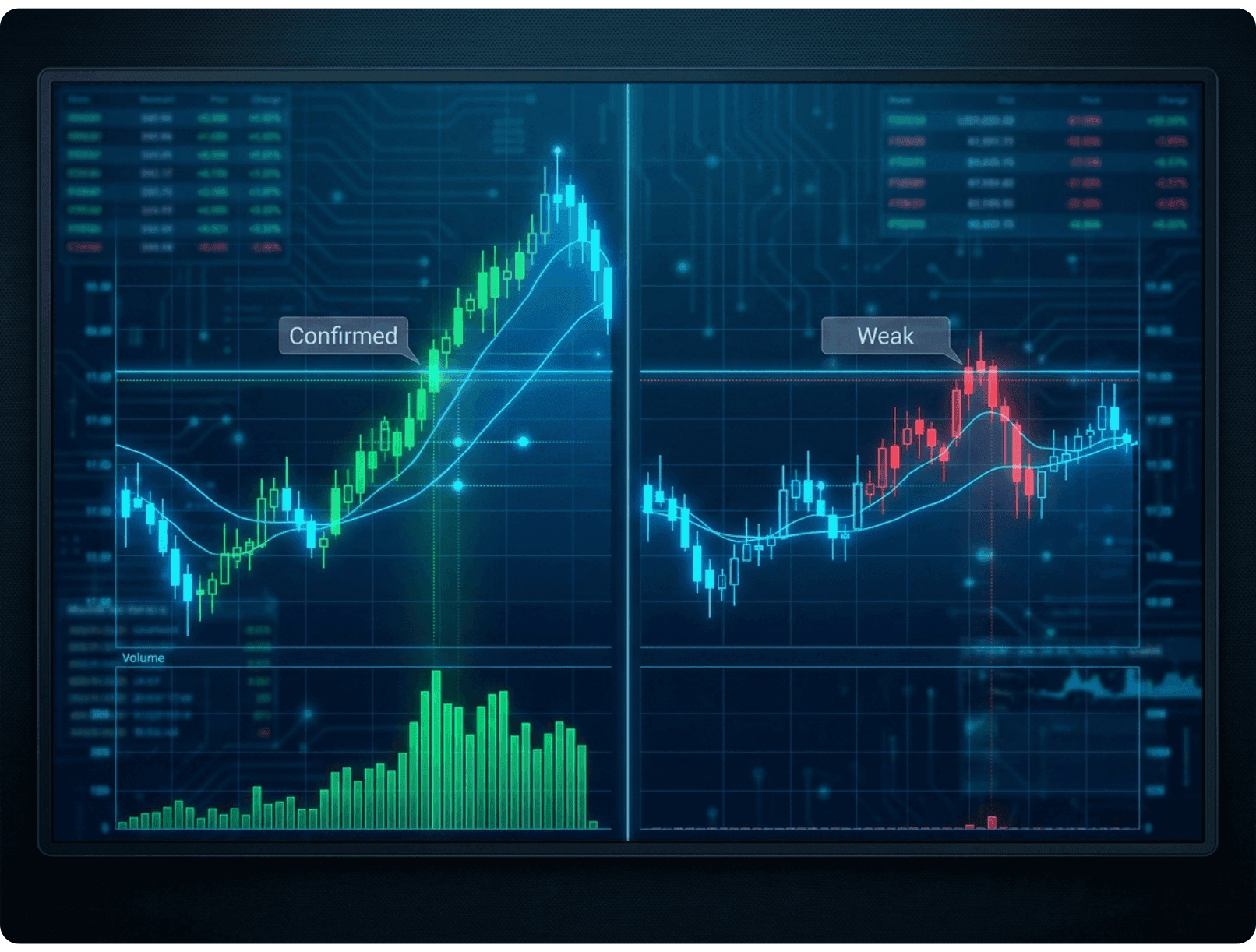
In the dynamic world of financial markets, price action often takes centre stage. Traders are naturally drawn to the green and red candlesticks moving across their screens. However, focusing solely on price is akin to driving a car by only looking at the speedometer—you might know how fast you’re going, but you don’t know how much fuel is left in the tank. In trading, that fuel is volume, and the road condition is liquidity.
Understanding these two critical concepts allows traders to distinguish between a strong, sustainable trend and a weak "fake-out". Whether you are a beginner looking to place your first trade or an institutional investor executing high-frequency strategies, mastering volume and liquidity is essential for navigating the markets with confidence. By the end of this guide, you will understand how to use these metrics to validate trends, identify reversals, and manage your risk effectively.
1. Why Volume Matters
Volume represents the total number of shares, contracts, or lots traded within a specific timeframe. It is a direct measure of market activity and intensity. Without volume, price movements are often fragile and unreliable.
Confirmation of Trends
Think of volume as the validation of a price move. If an asset’s price is rising and the volume is increasing simultaneously, it indicates that there is genuine conviction behind the move. High volume suggests that large institutional players are participating, making the trend more likely to continue. Conversely, a price move on low volume is often viewed with suspicion, as it suggests a lack of consensus among traders.
Identifying Reversals
Volume analysis is a powerful tool for spotting potential market turning points. A common signal is divergence: if the price of an asset continues to reach new highs but volume starts to decrease, it suggests the trend is running out of steam. The buyers are exhausted, and a reversal may be imminent. Similarly, a sharp spike in volume after a long trend can indicate a "climax", signalling that the trend is about to end as the last buyers or sellers rush in.
Assessing Market Interest
Volume acts as a thermometer for market interest. High volume indicates that an asset is "in play"—it is attracting significant attention and capital. For traders, high-volume assets (like major Forex pairs or blue-chip stocks) are generally safer to trade because the high participation levels reduce the likelihood of erratic, manipulative price swings.