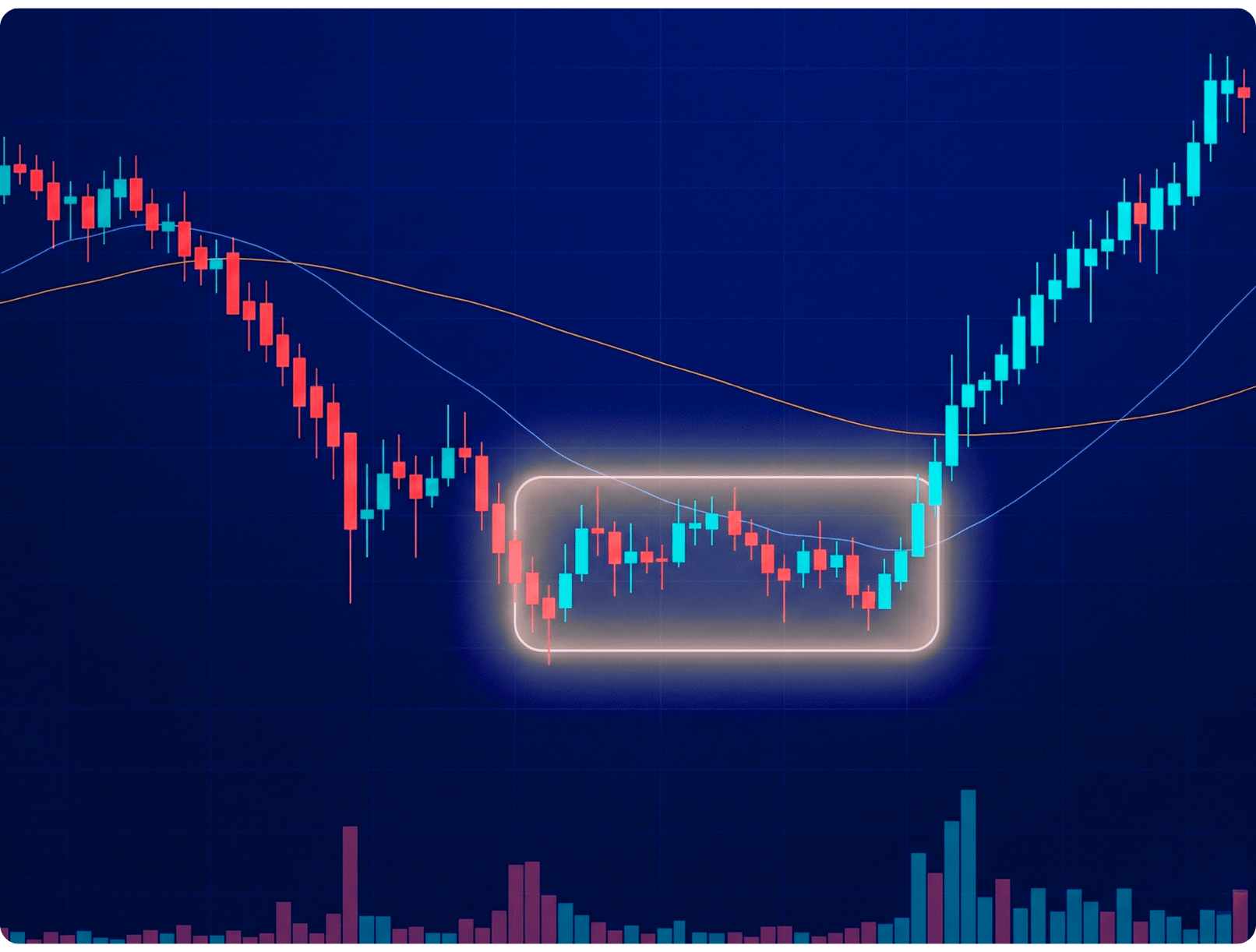



Many traders spend countless hours refining their entry and exit points, searching for the perfect technical setup. However, experienced professionals know that long-term survival in the markets often comes down to a different metric entirely: position sizing. Knowing how much to trade is just as critical as knowing when to trade.
At My Maa Markets, we believe that capital preservation is the first rule of trading. Position sizing is the mathematical approach to determining how much capital to allocate to a specific trade based on your risk tolerance and account size. Without a robust strategy, a string of losses can significantly deplete your account, regardless of how good your analysis is. By implementing sound position sizing, you can help protect your portfolio from market volatility while positioning yourself for steady growth.
Below, we explore five proven strategies to help you manage risk effectively.
1. Fixed Fractional Position Sizing
Fixed fractional position sizing is one of the most popular methods among retail traders due to its focus on capital preservation. This strategy involves risking a fixed percentage of your total account equity on each trade, typically between 1% and 3%. As your account grows, your position size increases; if your account shrinks, your position size decreases proportionally, acting as a natural brake during losing streaks. For example, if you have a $10,000 account and decide to risk 2% per trade, your maximum risk exposure for a single trade is $200. If your stop loss is 50 pips away, you would calculate your lot size so that a 50-pip move results in a $200 loss. If your account drops to $9,000, your 2% risk adjusts down to $180, protecting your remaining capital.
Tip: For beginners, it is generally recommended to start with a risk of 1% or less per trade. This allows you to survive the learning curve without facing a catastrophic drawdown.
2. Fixed Ratio Position Sizing
Developed by Ryan Jones, the Fixed Ratio strategy addresses a common critique of the Fixed Fractional method: that it does not allow smaller accounts to grow fast enough. This strategy focuses on the relationship between the number of contracts (or lots) traded and the profit earned. You only increase your position size when you have accumulated a specific amount of profit, known as the "Delta."
For instance, suppose your Delta is $2,000. You start trading with 1 mini-lot. You cannot increase your size to 2 mini-lots until you have generated $2,000 in profit. To move to 3 mini-lots, you would need to generate an additional $4,000 (2 lots x Delta). This method ensures that you are only increasing your exposure using realized profits, rather than your initial capital.
Tip: This strategy requires strict discipline. Ensure you clearly define your Delta before you begin trading and stick to the plan, regardless of market excitement.
3. Percentage Volatility Position Sizing
The financial markets are not static; volatility shifts constantly. This strategy adjusts your position size based on the current volatility of the asset you are trading. The logic is simple: when volatility is high, price swings are larger, so you should trade smaller positions to keep your risk constant. Conversely, when the market is quiet, you can afford to trade larger positions.
Traders often use the Average True Range (ATR) indicator to measure volatility. If the ATR on a currency pair like GBP/USD is high (indicating large daily moves), you would reduce your lot size to ensure a standard stop loss doesn't exceed your risk limit. This approach normalizes risk across different assets, whether you are trading stable blue-chip stocks or volatile commodities.
Tip: You can access the ATR indicator and other advanced volatility tools directly on the My Maa Markets MetaTrader 5 (MT5) platform to automate these calculations.
4. Risk-Based Position Sizing
Risk-based position sizing, often called "Fixed Dollar Amount" sizing, is a straightforward approach where a trader decides on a specific currency amount they are willing to lose per trade. Unlike the percentage model, this number remains static regardless of account fluctuation until the trader decides to change it manually.
For example, a trader might decide they are willing to risk exactly $100 per trade. Whether the stop loss is 10 pips or 100 pips away, the lot size is adjusted so that the potential loss equals $100. This is particularly useful for traders who want to conceptualize their risk in tangible monetary terms rather than abstract percentages.
Tip: While simple, be cautious if your account balance drops significantly. Risking $100 on a $10,000 account is 1%, but risking $100 on a $2,000 account is 5%, which increases your risk profile substantially.
5. The Kelly Criterion
The Kelly Criterion is a mathematical formula used to determine the optimal theoretical size for a series of bets (or trades). It focuses on maximizing the growth rate of capital by considering your winning percentage and your win-to-loss ratio. The formula calculates the percentage of your capital to risk to achieve the highest possible return over the long run.
The formula is: Kelly % = W - [(1 - W) / R]
Where W is your winning probability and R is your win/loss ratio.
While mathematically sound, the Kelly Criterion can suggest very aggressive position sizes (sometimes exceeding 20% or 30% of equity), which can lead to massive volatility in your account balance. Consequently, many professional traders use a "Half-Kelly" or "Quarter-Kelly" approach, effectively cutting the suggested size by 50% or 75% to reduce volatility while still aiming for growth.
Tip: Only use the Kelly Criterion if you have a significant track record of trading data to accurately determine your win rate and risk-reward ratio. Inaccurate data will lead to dangerous position sizing suggestions.
Conclusion
There is no "one size fits all" approach to position sizing. The right strategy for you depends on your risk tolerance, account size, and psychological comfort with drawdown. Whether you choose the safety of the Fixed Fractional method or the growth potential of the Fixed Ratio, consistency is the key to success.
At My Maa Markets, we provide the tools you need to implement these strategies effectively. From our FSC-regulated environment to our advanced MT5 platform with over 275+ trading instruments, you have the resources to trade with precision.
If you are ready to test these strategies in a risk-free environment, or if you are prepared to apply them to the live markets, we invite you to explore our account options today.
[Open an Account with My Maa Markets]
Risk Disclaimer: CFDs and Margin Fx are leveraged products carry a high level or risk to your capital. Trading is not suitable for everyone and may result in you losing substantially more than your initial investment. You do not own, or have any right to the underlying assets. You should only trade with money you can afford to lose.