


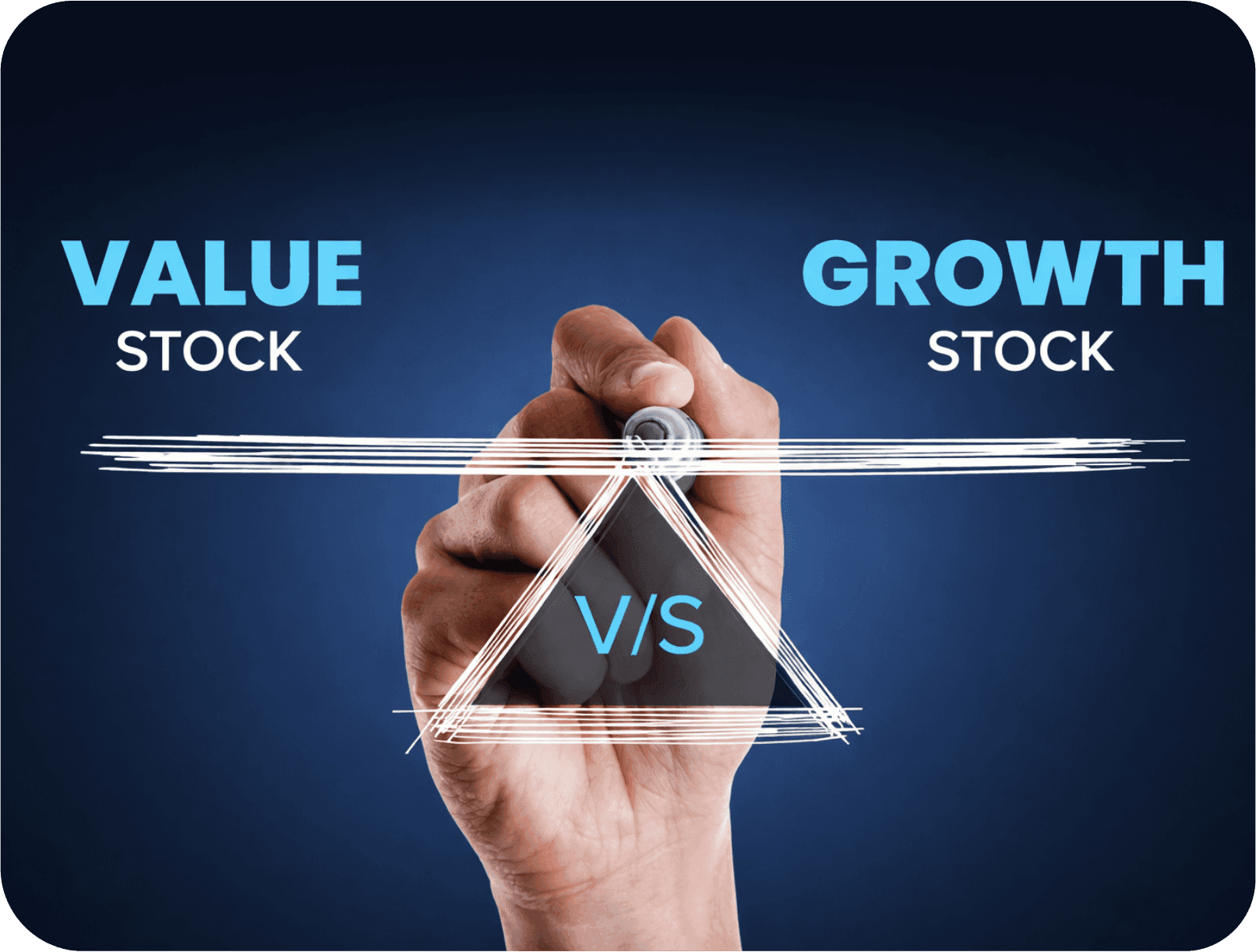
Every trader eventually faces a crossroads in their investment journey: do you chase the next big technology giant that promises sky-high returns, or do you stick with established, reliable companies that pay steady dividends? This is the fundamental debate between growth and value investing—a tug-of-war between future potential and current reliability.
Understanding the distinction is critical for building a robust portfolio, especially in the diverse markets of the UAE, India, and beyond. Whether you are looking for stability or aggressive capital appreciation, knowing how to identify and trade these two asset classes can significantly impact your long-term success.
1. Defining Value Stocks: The Market’s Bargains
Value stocks are shares in companies that are currently trading below their intrinsic worth. Think of them as high-quality items on sale; the market has undervalued them relative to their financials, such as earnings, sales, or book value. According to Investopedia, these are often mature companies in established industries—like finance, energy, or utilities—that may be temporarily out of favor due to market overreactions or cyclical downturns.
Practical Insight: Look for a low Price-to-Earnings (P/E) ratio and a low Price-to-Book (P/B) ratio. For example, established automakers like Honda (HMC) often trade at lower multiples compared to electric vehicle startups, offering a classic value proposition.
2. Defining Growth Stocks: The High-Flyers
In contrast, growth stocks represent companies expected to increase their revenue and earnings at a rate significantly faster than the average company in their industry or the general market. These companies rarely pay dividends; instead, they reinvest their earnings to fuel further expansion, research, and development.
Practical Insight: Don't be scared off by high valuations. Growth stocks, such as Amazon (AMZN), have historically traded at high P/E ratios because investors are paying a premium for future potential. The goal here is capital appreciation—selling the stock later at a much higher price.
3. Key Differences Every Trader Should Know
While both strategies aim for profit, they take very different paths. The primary difference lies in how they generate returns. Value stocks typically provide a safety net through dividends, offering a steady income stream even if the stock price remains flat. Growth stocks rely almost entirely on price appreciation, making them more sensitive to market sentiment.
Data Point: Historical analysis often shows that these two styles trade leadership roles. According to MSCI index data, growth stocks have generally outperformed in the recent low-interest-rate environment, whereas value stocks tend to perform better during economic recoveries and periods of high inflation.
4. The Risks and Rewards of Value Investing
The allure of value investing is lower volatility. These stocks are often considered "defensive" because they are less likely to crash during a market correction. However, the biggest risk is falling into a "value trap"—buying a stock that appears cheap but is actually cheap because the company is fundamentally deteriorating or losing market share.
Tip: To avoid value traps, ensure the company has strong cash flow and a history of consistent dividend payments before you open a position.
5. The Risks and Rewards of Growth Investing
Growth stocks offer the highest ceiling for returns, often delivering triple-digit gains in short periods during bull markets. However, they carry higher volatility. Because their price is based on future expectations, any disappointment in earnings reports can lead to sharp sell-offs.
Tip: Growth stocks are highly sensitive to interest rates. When rates rise, the future earnings of these companies become less valuable in today's terms, often causing their share prices to drop. Keep an eye on central bank announcements when trading this sector.
6. Determining Your Trading Style
Your choice between value and growth should depend on your risk tolerance, time horizon, and the current economic cycle.
- Choose Value if: You prefer lower volatility, want steady income from dividends, and are trading during an economic recovery or recession.
- Choose Growth if: You have a higher risk tolerance, a longer time horizon, and are trading during a strong economic expansion.
Many successful institutional investors don't choose just one; they diversify. By holding a mix of both, you can potentially smooth out volatility in your portfolio. Using a robust platform like MT5 allows you to analyse both sectors simultaneously, giving you the flexibility to pivot as market conditions change.
Conclusion
Whether you align with the steady reliability of value stocks or the explosive potential of growth stocks, the key to success lies in informed decision-making and precise execution. At My Maa Markets, we provide the advanced tools, competitive spreads, and expert support you need to navigate these sectors with confidence.
[Start Trading with My Maa Markets Today]
Risk Disclaimer: CFDs and Margin Fx are leveraged products carry a high level or risk to your capital. Trading is not suitable for everyone and may result in you losing substantially more than your initial investment. You do not own, or have any right to the underlying assets. You should only trade with money you can afford to lose.